





Occupational accident
The glossary of statistical terms, published by the Organisation for Economic Co-operation and Development (OECD), defines an occupational accident as: ‘…an unexpected and unplanned occurrence, including acts of violence, arising out of or in connection with work which results in one or more workers incurring a personal injury, disease or death. As occupational accidents are to be considered travel, transport or road traffic accidents in which workers are injured and which arise out of or in the course of work, i.e. while engaged in an economic activity, or at work, or carrying on the business of the employer.’
[edit] Related articles on Designing Buildings
- Accident book.
- Accident reports in construction.
- CDM.
- Health and safety.
- Injuries on construction sites.
- Near miss.
- Notification to HSE.
- Occupational health.
- Occupational injury.
- Reporting accidents and injuries on construction sites RIDDOR.
- Safety audit.
- Site records and registers.
- Slip and trip hazards.
Featured articles
Check out some of the best features and news from Designing Buildings as well as key stories from around the web.

Your guide to The Construction Reset at UKCW Birmingham.

Accommodating the Victorian and Edwardian working woman. Book review.
Rethinking passive fire protection in design

PFP demands the same level of design rigour as structure or services.

38% of Gen Zs feel safe when a fire door is wedged open.
Stunning images from around the world

Shortlist for CIOB’s Art of Building photography competition.

Guidance for conversion of traditional pre-1919 stone buildings.
Industrial heritage in the Ruhr

A marked difference to the fate of industrial landscapes in the UK.
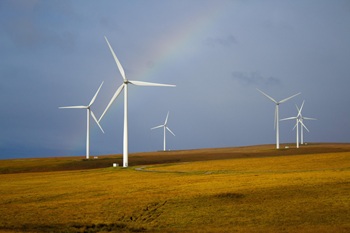
Communities will be able to build their own clean energy.
Why diversity and inclusion matters for SMEs

CIOB’s D&I Charter shows how practical changes can support long-term growth.
Cut electricity bills to power growth

Coalition sends joint letter to the Chancellor.

Gasholders: a history in pictures. Book review.
Recognition, influence and growth

SocEnv identifies three strategic pillars in new strategy to 2045.